

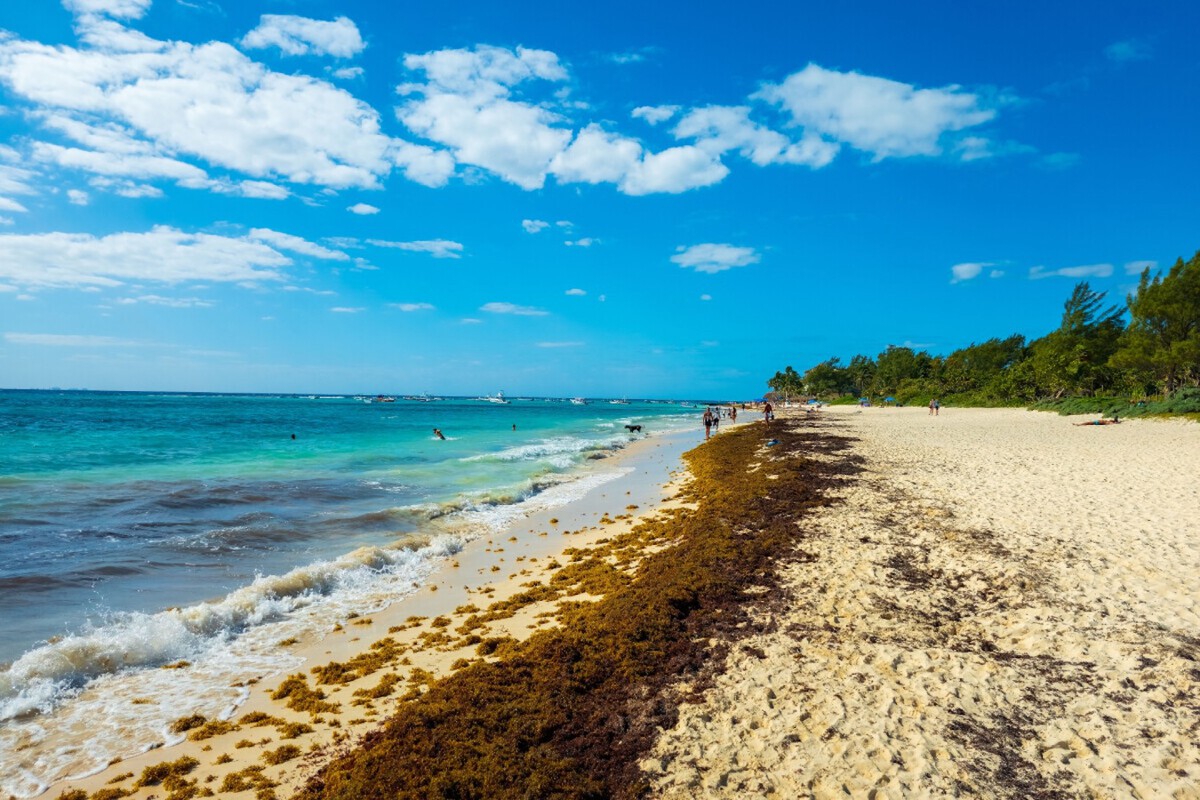
Every season, sargassum washes up on the shores of the Mexican Caribbean, affecting tourism, fishing and coastal ecosystems.
In response to this situation, the Mexican Government and the authorities in Quintana Roo are combining offshore collection, the legal recognition of sargassum as a resource, and support for the companies that process it.
Today, it is used to manufacture everything from concrete and textiles to biodegradable sandals, fertilisers and biogas.
Utilising it is not the same as solving the problem. Sargassum contains arsenic, so it must be cleaned and certified before any use, with the associated costs. Furthermore, its recovery reduces accumulation but does not repair the ecological damage already caused. In moderate quantities, in fact, it provides a habitat for turtles, crabs and fish.
Although the context is very different from that of the European Atlantic, the case illustrates an idea we share at BIOCHAINS Atlantic: algal biomass only becomes valuable when there is an organised supply chain linking those who harvest it, process it and use it, with guarantees of quality and sustainability.

